



More than a decade after the Premier Service Medical Aid Society scandal exposed lavish executive salaries, questionable payments and alleged abuse of public funds, Zimbabwean civil servants are still contributing to a medical aid scheme whose near-collapse was blamed on years of mismanagement and elite enrichment.
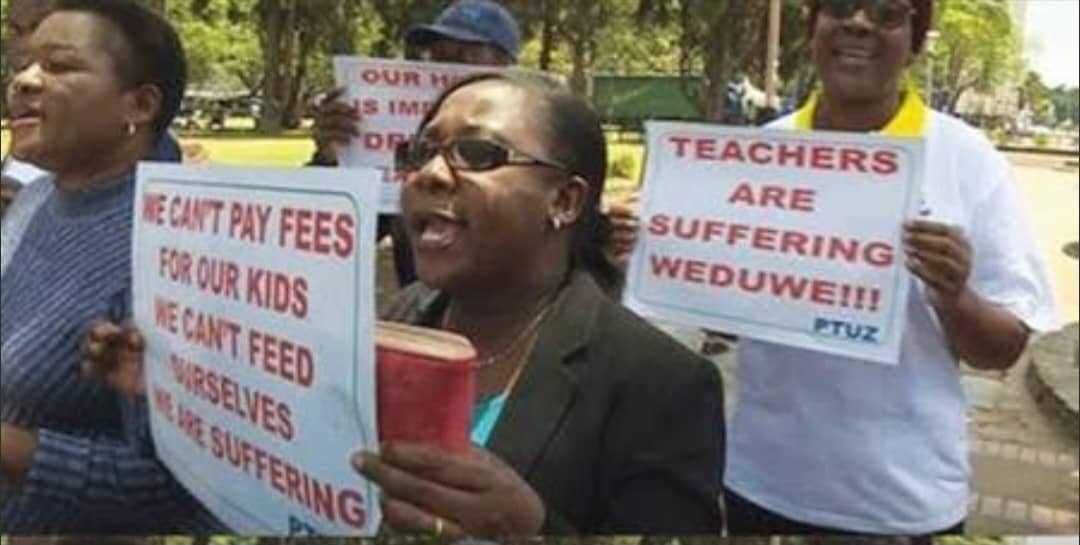
Teachers, nurses, police officers, soldiers and other government workers continued to see monthly deductions from their salaries even as hospitals and pharmacies turned away PSMAS members because the society could not settle outstanding bills.
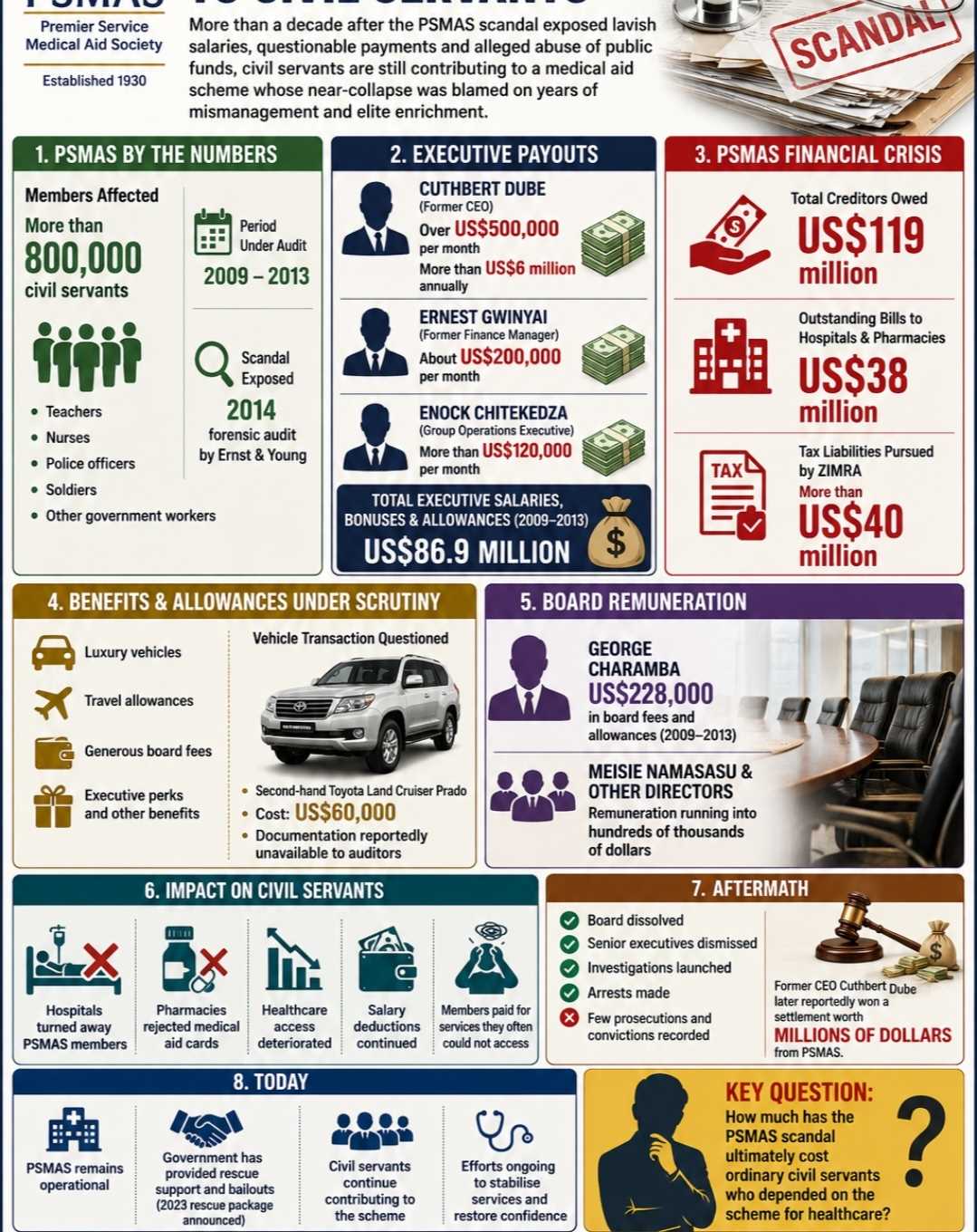
The scandal, uncovered through a forensic audit conducted by Ernst & Young in 2014, revealed how millions of dollars were paid to senior executives and board members between 2009 and 2013 while the institution accumulated massive debts and struggled to provide healthcare services to its more than 800,000 members.
At the centre of the controversy was former chief executive Cuthbert Dube, who was reported to have received a monthly remuneration package exceeding US$500,000, including salary, allowances and bonuses. Audit findings cited in public reports indicated that his annual earnings surpassed US$6 million.
Other senior executives also received substantial remuneration packages. Former finance manager Ernest Gwinyai reportedly earned about US$200,000 per month, while group operations executive Enock Chitekedza received more than US$120,000 monthly.
According to findings from the forensic audit, PSMAS executives collectively received approximately US$86.9 million in salaries, bonuses and allowances over a five-year period, while the institution owed creditors around US$119 million.
At the same time, healthcare providers were going unpaid.
By the end of 2013, PSMAS reportedly owed hospitals, pharmacies and other service providers nearly US$38 million, forcing many institutions to reject members seeking treatment despite their continued contributions to the scheme.
Related Stories
The audit also highlighted generous board fees, allowances, luxury vehicles and other benefits enjoyed by senior officials.
Among those named in the findings was George Charamba, who served on the PSMAS finance and budget committee and reportedly received more than US$228,000 in board fees and allowances between 2009 and 2013.
Former board chairperson Meisie Namasasu and other directors were also listed among beneficiaries of remuneration packages running into hundreds of thousands of dollars.
The audit further referenced a vehicle transaction involving Oppah Muchinguri-Kashiri, in which PSMAS reportedly purchased a second-hand Toyota Land Cruiser Prado for US$60,000. Auditors said supporting documentation for the transaction was not made available during the investigation.
Meanwhile, the financial crisis deepened. The Zimbabwe Revenue Authority reportedly pursued PSMAS over tax liabilities exceeding US$40 million linked to untaxed executive salaries and benefits.
Government eventually dissolved the board, dismissed senior executives and announced investigations. Although several arrests followed, relatively few prosecutions and convictions emerged from what remains one of Zimbabwe's biggest public-sector corruption scandals.
Ironically, Dube later sued PSMAS for unpaid benefits and reportedly secured a settlement worth millions of dollars.
Today, PSMAS continues to operate, supported by government interventions and bailout packages. In 2023, authorities announced a rescue package aimed at stabilising the institution after years of debt, labour disputes and operational challenges.
For many civil servants, however, the scandal remains a painful reminder of how an institution created to provide affordable healthcare was brought to the brink by alleged excesses at the top, while ordinary contributors were left struggling to access the medical services they had paid for.






Leave Comments