






Harare and Bulawayo are set to receive a major environmental and climate resilience boost after being selected as Zimbabwe’s two participating cities under the Global Environment Facility (GEF)-8 Sustainable Cities Integrated Programme, unlocking access to international grant funding and technical expertise aimed at tackling worsening urban environmental challenges.
The development positions the country’s two largest cities to benefit from green infrastructure investments, climate adaptation projects and urban planning support at a time when local authorities are battling recurring flooding, waste management challenges, wetland degradation and growing climate-related vulnerabilities.
Under the programme, Harare and Bulawayo will receive support for projects focused on wetland protection, waste management and nature-based solutions designed to address water scarcity, flooding and land degradation.
The initiative is also expected to strengthen climate adaptation measures through improved drainage systems, wetland restoration and stronger early warning systems to minimise the impact of floods, droughts and heatwaves, which have increasingly threatened urban communities in recent years.
For Zimbabwe, the programme forms part of a broader US$13,2 million allocation under GEF-8, targeting biodiversity conservation, climate change response and land degradation management.
The allocation adds to Zimbabwe’s wider GEF investment portfolio, which currently includes eight active national projects worth US$36,7 million in GEF financing, alongside an additional US$440 million in regional and global projects.
The latest support is expected to ease pressure on local authorities whose limited council revenues have often constrained major infrastructure investments.
Participation in the programme means Harare and Bulawayo will access non-repayable grants, technical support from the Food and Agriculture Organization (FAO) and other GEF agencies, while improving their ability to attract further donor and private sector investment for urban resilience programmes.
Beyond infrastructure financing, the programme seeks to strengthen urban governance and planning capacity by equipping city authorities with technical assistance to improve integrated planning, align local policies with environmental priorities and build expertise to manage climate and ecological risks more effectively.
Harare and Bulawayo will also gain access to the Global Platform for Sustainable Cities, opening opportunities for knowledge sharing, data tools and partnerships involving FAO, the United Nations Environment Programme (UNEP), the World Bank and private sector actors.
Related Stories
The programme is expected to prioritise vulnerable communities, particularly those in informal settlements and peri-urban areas where climate-related shocks are often most severe.
Authorities said interventions would adopt gender-sensitive approaches to improve resilience and living conditions among populations most exposed to environmental stress.
Zimbabwe’s participation follows a structured nomination process led by the Ministry of Environment, Climate and Wildlife, which serves as the country’s GEF Operational Focal Point and nominated Harare and Bulawayo for the initiative.
FAO, acting as the implementing agency, is now working with the Ministry and the two city councils to develop projects through technical consultations and stakeholder engagement processes ahead of approval by the GEF Secretariat and Council.
Once approved, implementation will be undertaken by the councils with FAO support under strict reporting and monitoring systems.
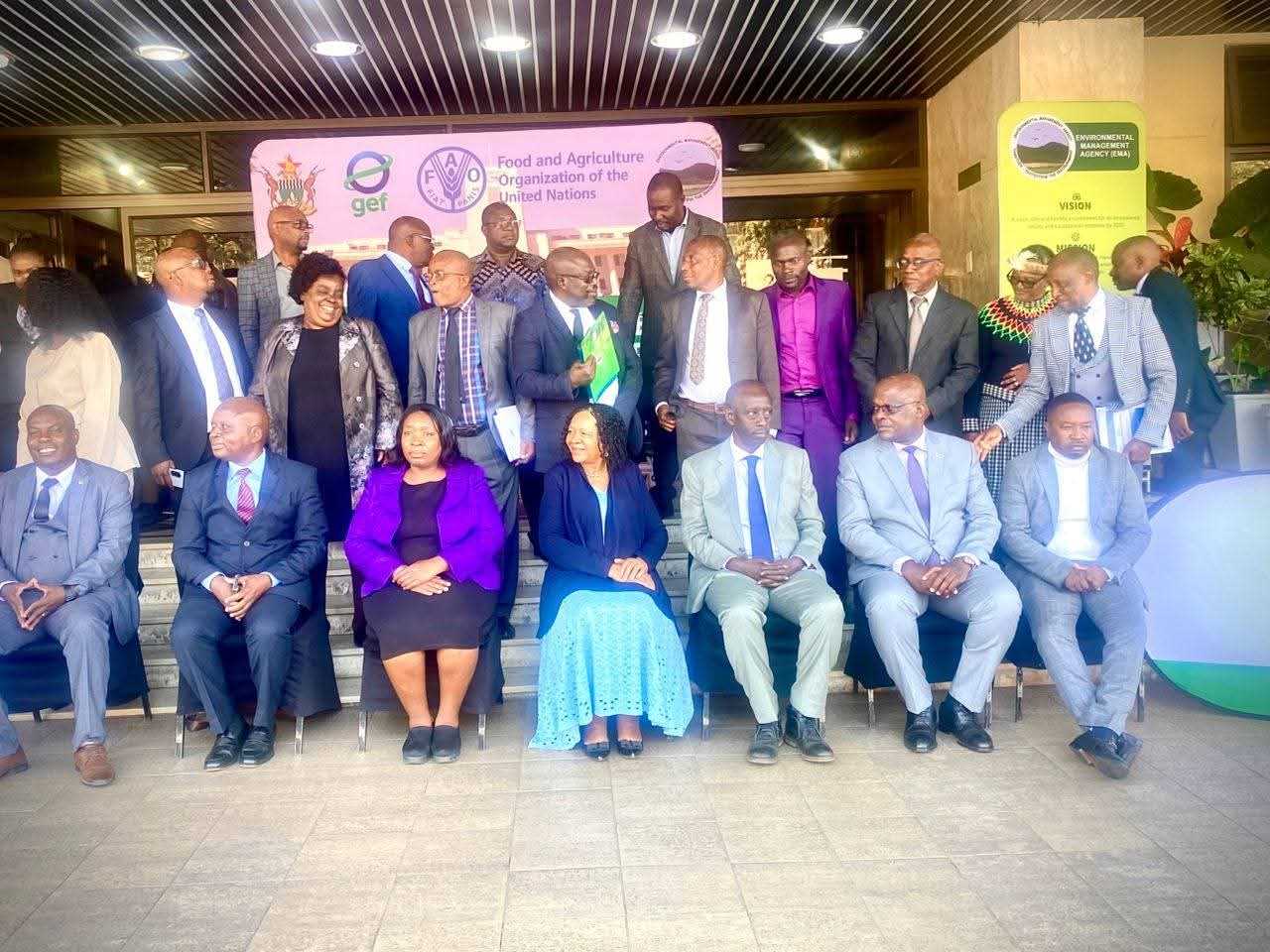
Speaking at the GEF-8 Sustainable Cities Integrated Programme in Zimbabwe Project Launch held in Bulawayo yesterday, Harare Mayor and President of the Urban Councils Association of Zimbabwe, Councillor Jacob Mafume, welcomed the initiative, describing it as an important model for collaboration.
“This is the kind of partnership we need between Government, local authorities and development partners,” said Councillor Mafume.
He said Harare stood ready to work closely with all stakeholders involved in the programme and encouraged cities to consider long-term co-funding arrangements to sustain environmental investments.
For Harare and Bulawayo, the programme signals a shift from reactive urban crisis management toward longer-term planning focused on resilience, sustainability and environmental restoration.






Leave Comments