





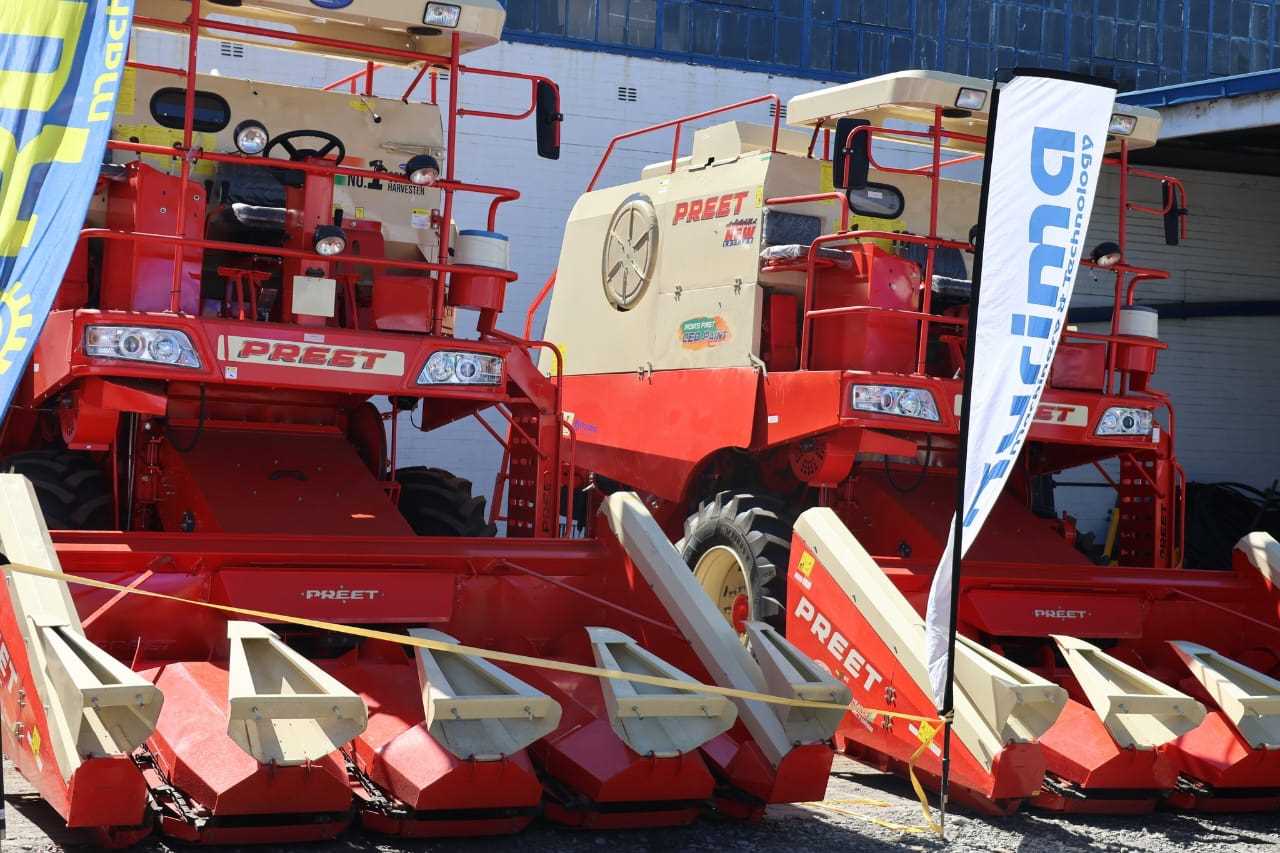
Zimbabwe has scaled up its agricultural support programmes with the rollout of post-harvest and mechanisation equipment targeting smallholder, A1, and communal farmers, as authorities move to address persistent inefficiencies in storage and crop handling that continue to undermine food security.
The latest intervention, implemented under the Zimbabwe Agricultural Productivity Programme, includes the distribution of 2,100 metal silos—comprising 1,000 units of 0.25MT capacity and 1,100 units of 1.0MT capacity—alongside 70 multi-crop threshers and five combine harvesters. The equipment is aimed at improving storage capacity, reducing losses, and enhancing value addition across the agricultural value chain.
The Ministry of Finance said the handover marks “a major step in strengthening national food systems and reducing post-harvest losses,” highlighting the scale of inefficiencies that have historically affected Zimbabwe’s agricultural output. Post-harvest losses in Zimbabwe are estimated at 20–30 percent for grains, translating to hundreds of thousands of tonnes lost annually due to inadequate storage, poor handling, and limited mechanisation.
Related Stories
While the distribution of silos is expected to improve household-level storage and reduce grain spoilage, the scale of intervention remains modest relative to national demand.
Zimbabwe produces between 1.5 and 2 million tonnes of maize annually in good seasons, suggesting that significantly larger storage capacity will be required to meaningfully reduce aggregate losses. Similarly, the allocation of just five combine harvesters raises questions about mechanisation reach, given that over 70 percent of agricultural production is driven by smallholder farmers who largely rely on manual or low-mechanisation systems.
The programme is supported by the African Development Bank and the Food and Agriculture Organization, reflecting continued reliance on external financing and technical assistance in driving agricultural transformation. The Ministry noted that the initiative is part of efforts to support “resilience, productivity and climate-smart agriculture,” aligning with national goals of improving food security and rural livelihoods.
However, structural constraints remain. Limited access to financing, high input costs, and climate variability continue to affect productivity, while mechanisation gaps persist across most communal farming areas. Without complementary investments in irrigation, extension services, and market access, the impact of equipment distribution alone may be constrained.








Leave Comments