






Zimbabwe has recorded a notable rise in formal job creation over the past two years, with nearly half a million jobs added between 2024 and 2025, according to data from the National Social Security Authority.
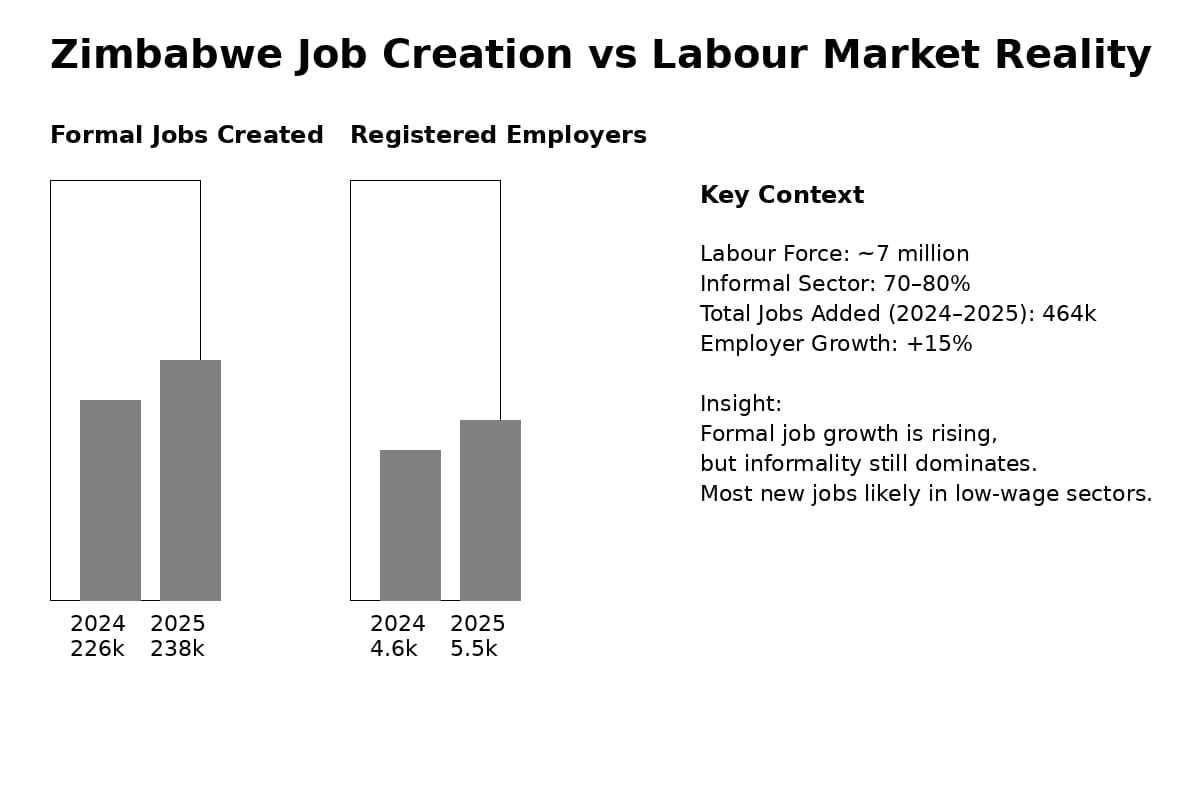
The figures show new employment increasing from 226,000 jobs in 2024 to 238,000 in 2025, bringing the cumulative total to more than 464,000 jobs over the two-year period. During the same timeframe, the number of registered employers rose from 4,600 to 5,500, reflecting a 15 percent increase.
The NSSA data points to expanding activity in the formal sector, suggesting improved business registration and compliance, alongside signs of gradual economic stabilisation. Growth in employer registrations is often interpreted as an indicator of deeper formalisation, which strengthens tax collection, social protection coverage, and labour regulation.
Related Stories
However, economists caution that the headline job gains must be viewed within the broader structure of Zimbabwe’s labour market. With a labour force estimated at over 7 million people, the majority of employment remains concentrated in the informal sector, which accounts for more than 70–80 percent of total jobs. This means the reported gains, while significant in absolute terms, represent only a modest shift in the overall employment landscape.
The composition of the new jobs also remains a key concern. Although NSSA data does not provide a detailed sectoral breakdown, analysts suggest that much of the employment growth is likely concentrated in lower-wage areas such as retail, agriculture, and small-scale manufacturing. These sectors typically offer limited productivity gains and lower income security.
Without stronger expansion in high-value industries such as mining, manufacturing, and formal services, questions remain over whether job creation is translating into meaningful improvements in earnings and living standards.
The 15 percent rise in registered employers further signals progress in formalisation, but it also highlights underlying vulnerabilities in the business environment. Many small and medium enterprises continue to face challenges including constrained access to finance, elevated operating costs, and policy uncertainty, all of which can affect job sustainability.
While the latest figures suggest momentum in formal employment growth, the broader labour market continues to reflect deep structural imbalances that could limit the long-term impact of current gains.







Leave Comments