









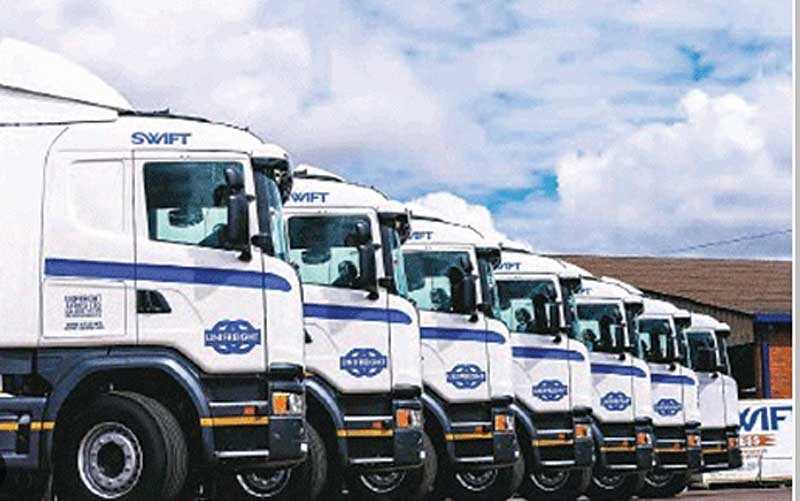
Unifreight Africa Limited posted strong financial results for the year ended December 31, 2025, with revenue increasing 44% to ZWG1.36 billion from ZWG944 million recorded in the prior year, despite operating in a difficult economic environment marked by inflation and currency instability.
Operating profit rose 74% to ZWG230.1 million from ZWG132 million, while profit for the year climbed sharply to ZWG128.6 million compared to ZWG53.2 million in 2024. Earnings per share increased to 153.57 cents from 66.49 cents, with total assets growing to ZWG1.65 billion from ZWG1.44 billion.
“The results reflect the successful execution of the company’s strategic initiatives, particularly fleet renewal and operational efficiency programmes,” the company said in its abridged report.
The Group recorded an 8% year-on-year increase in freight volumes as it strengthened its core express road freight business through its Swift Transport division. Management said cost containment measures and operational efficiencies implemented during the year enhanced service delivery and reinforced the company’s market position.
“Our focus continues to be on disciplined capital allocation, particularly towards modernising the fleet to enhance efficiency and reliability,” management said.
Fleet renewal remains central to the company’s long-term strategy, with Unifreight targeting a 25% reduction in the average fleet age to lower maintenance costs and improve fuel efficiency.
A key development during the reporting period was the change of the Group’s functional currency from Zimbabwe Gold to United States dollars effective January 1, 2025.
The company said the move was designed to provide “a more stable basis for financial reporting and business planning” amid ongoing exchange rate volatility.
Related Stories
Independent auditors issued a qualified opinion, highlighting non-compliance with International Accounting Standard 21 relating to the methodology used in implementing the functional currency change.
The auditors noted that this departure from International Financial Reporting Standards means certain elements of the financial statements “may be materially misstated.”
The group acknowledged that economic volatility remains a key risk, with persistent inflation and currency fluctuations continuing to affect operational costs and financial stability.
Management also noted that the capital-intensive fleet replacement programme requires careful cash flow management to sustain operations while funding expansion.
Despite improved profitability, the board resolved not to declare a final dividend for the 2025 financial year.
“The decision aligns with the company’s long-term strategy to strengthen its operational foundation and preserve cash for capital expenditure and working capital requirements,” the company said.
Unifreight said it will continue reinvesting cash flows into modern vehicles, technology, and operational systems to improve efficiency and position the Group for sustainable growth.
“By reinvesting cash flows into modern assets and technology, the Group is positioning itself to capitalise on future opportunities and deliver consistent long-term value to shareholders,” management said.
Unifreight shares were trading at 300 ZWG cents as of April 8, 2026, with indicative annual share trading liquidity estimated at US$82.17K over the past 12 months, averaging about US$6.85K per month.








Leave Comments