






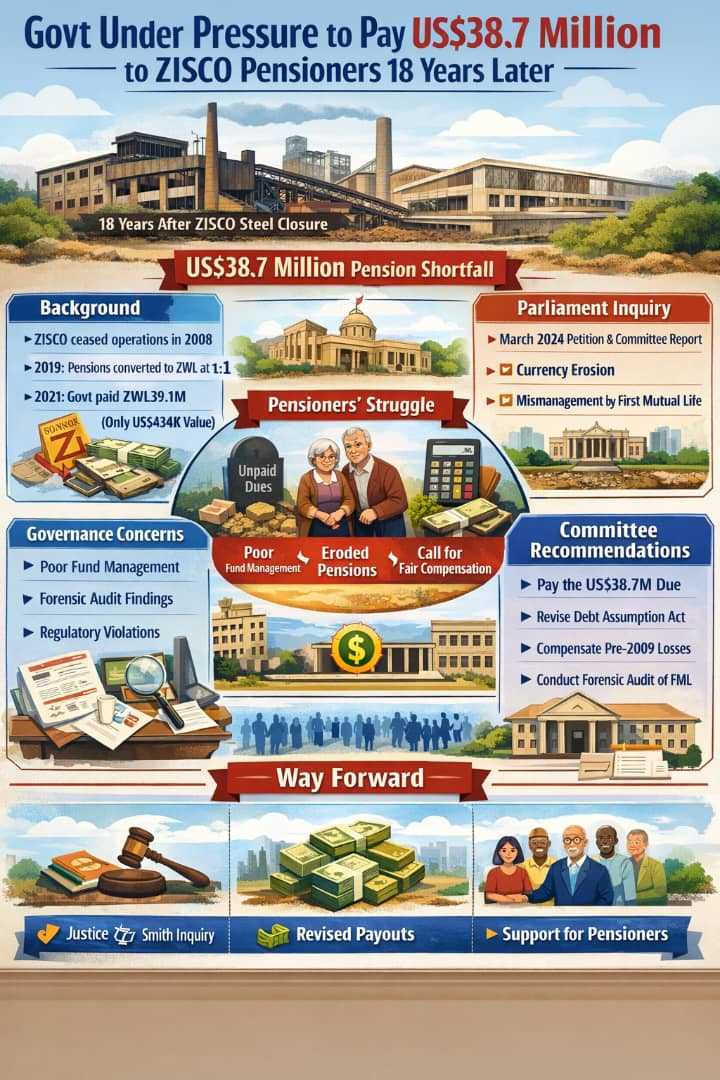
Nearly 18 years after ZISCO Steel (Private) Limited ceased operations, the Zimbabwean government is facing mounting pressure to settle an estimated US$38.7 million owed to former employees whose pensions were severely eroded by currency reforms and governance failures.
The issue resurfaced in Parliament following a petition submitted by ZISCO pensioners in March 2024, triggering an inquiry by the Portfolio Committee on Budget and Finance. The committee’s report, presented to the National Assembly on Wednesday, details how delayed payments, currency devaluation and alleged mismanagement by First Mutual Life (FML), the pension fund administrator, reduced pensioners’ benefits to only a fraction of their original value.
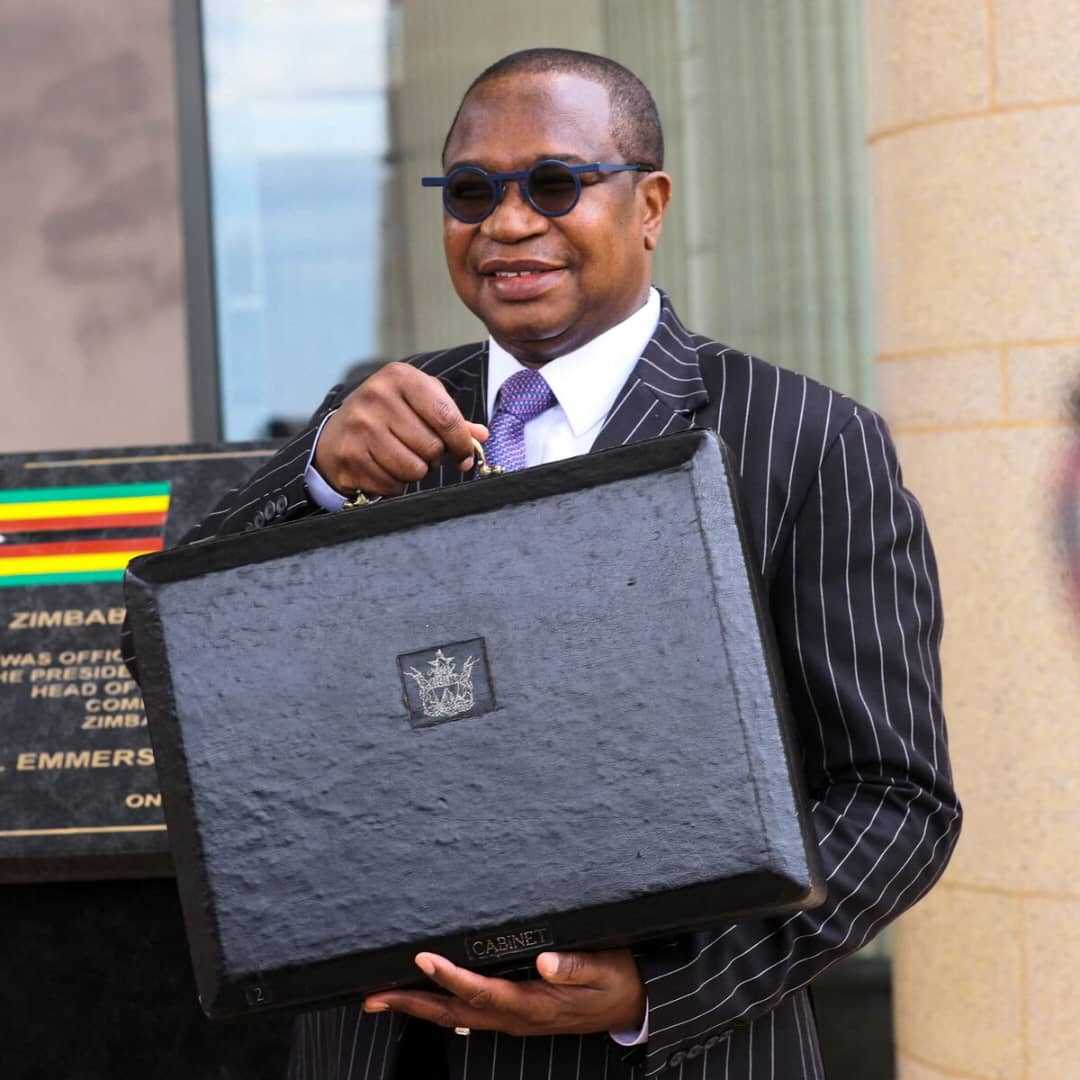
Finance Minister Mthuli Ncube confirmed that the Attorney General’s Office is drafting regulations and guidelines under the Justice Smith Commission of Inquiry to facilitate compensation for losses incurred before 2009 in insurance and pension values.
Treasury, through the Ministry of Finance, will be responsible for disbursing funds once the regulatory framework is finalised.
Background
ZISCO Steel ceased operations in 2008, although employee pension contributions reportedly continued until 2016. Many workers who exited the company after 2009 did not receive payouts, while inconsistencies in contribution remittances further complicated the settlement process.
In an effort to resolve legacy liabilities and attract potential investors, government enacted the Zimbabwe Iron and Steel (Debt Assumption) Act in May 2018, based on a 2016 actuarial valuation placing obligations at US$39.1 million.
However, the introduction of Statutory Instrument 33 of 2019 — which converted US dollar-denominated pensions into Zimbabwean dollars at a 1:1 rate — significantly eroded the real value of the benefits.
By the time government disbursed ZWL39.1 million to FML in 2021, the exchange rate had weakened to approximately ZWL90 per US dollar, reducing the payment’s real value to about US$434,954 and leaving an outstanding shortfall estimated at US$38.7 million.
Delays were further compounded by late submission of pensioner records to the Ministry of Finance and disruptions caused by the COVID-19 pandemic, which slowed reconciliation and verification processes.
Governance Concerns
The parliamentary report also raised governance concerns regarding First Mutual Life’s administration of the pension fund.
According to the findings, FML failed to maintain a legally required standalone pension fund and did not adequately adjust investment strategies in response to changing economic conditions, contributing to significant value erosion.
A forensic investigation conducted in February 2023 reportedly confirmed governance weaknesses affecting the company’s ability to meet pension obligations.
The committee cited breaches of asset separation requirements under Section 29 of the Insurance Act and Section 16 of the Pension and Provident Funds Act, noting that corrective directives issued by the Insurance and Pensions Commission (IPEC) were not fully implemented.
Related Stories
Parliamentary Pressure
Lawmakers across political parties called for urgent resolution of the matter.
Dzivarasekwa legislator Edwin Mushoriwa urged government to compensate pensioners using current exchange rates, arguing that the 1:1 conversion framework failed to preserve value.
“As we speak, some of the workers have died. Funds must be paid at the correct rate to restore value. It is the responsibility of the Ministry of Finance to ensure pensioners receive what is rightfully theirs,” Mushoriwa told Parliament.
Bikita West MP Energy Mutodi, who moved the motion to adopt the committee’s report, said the inquiry followed petitions from pensioners seeking value preservation and equitable treatment.
Government Measures
The Ministry of Finance confirmed that ZWL39.1 million was remitted to FML in 2021 for pension payments. Of this amount, ZWL34.46 million was allocated to the ZISCO Pension Fund, with smaller portions distributed to the Bimco Pension Fund and Lancashire Steel Pension Fund.
First Mutual Life indicated the funds were invested in a guaranteed fund intended to preserve value.
Government has also undertaken limited compensation measures linked to the 2019 currency reforms, disbursing US$400,000 to 3,668 beneficiaries in 2021, including 321 ZISCO pensioners.
Additional regulations currently being drafted under the Justice Smith Commission of Inquiry are expected to address pre-2009 insurance and pension losses more broadly.
Committee Recommendations
The Portfolio Committee on Budget and Finance recommended:
Immediate action by the Ministry of Finance to address the US$38.7 million shortfall and consider revising the Debt Assumption Act using updated actuarial valuations.
Full implementation of Statutory Instrument 162 of 2023 by December 2025 to compensate pre-2009 pension losses.
Strengthened regulatory oversight by IPEC to prevent future mismanagement.
A forensic audit of First Mutual Life covering all pension funds under its administration.
The long-running ZISCO pension dispute now represents not only a social justice issue for former workers, but also a test of Zimbabwe’s pension governance framework and the state’s ability to honour legacy financial obligations.





Leave Comments