









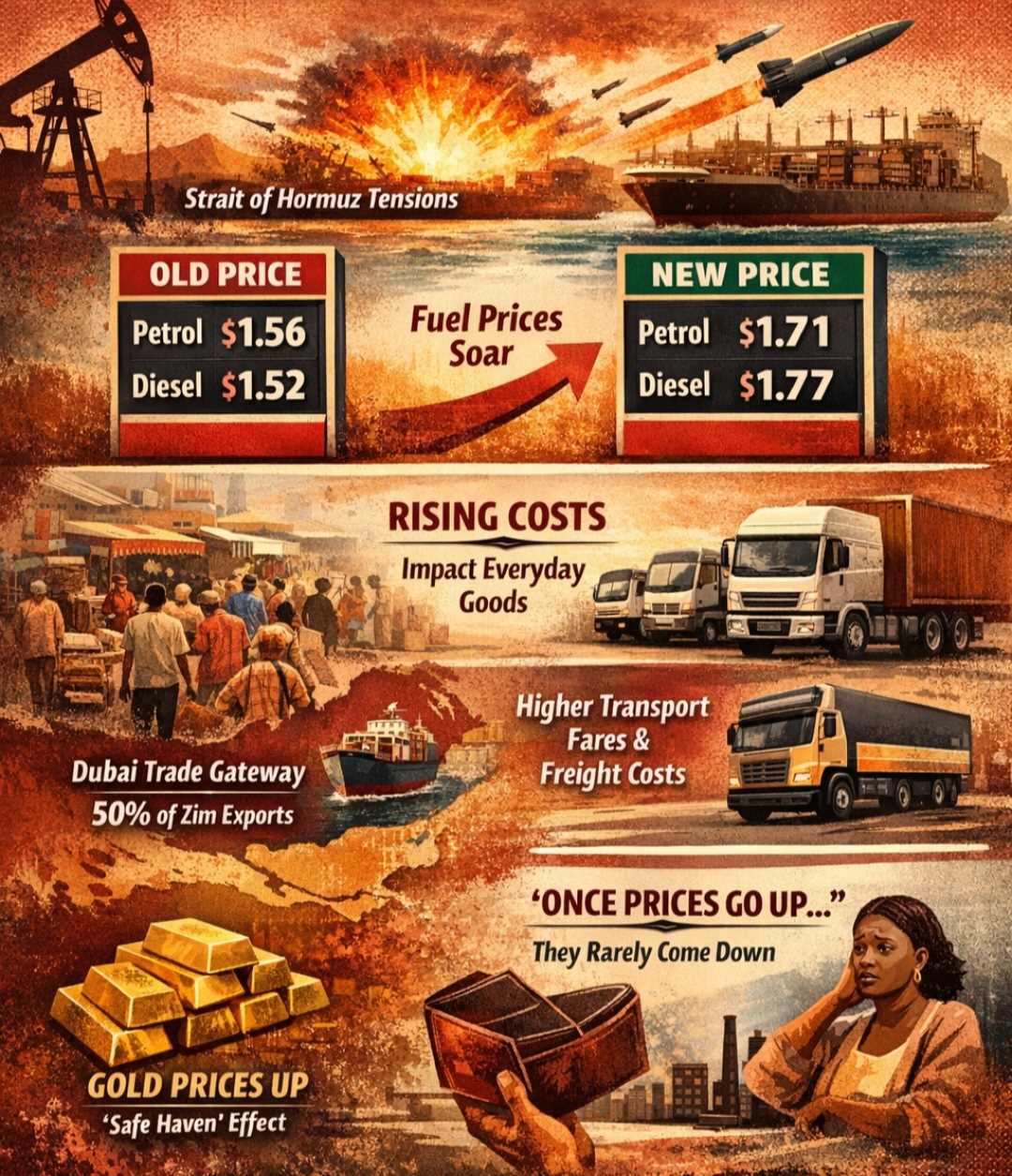
For many Zimbabwean consumers, the immediate concern whenever prices rise is that they rarely fall back, even after the crisis that triggered them subsides — a pattern that has defined the country’s economy for much of the past two decades.
Less than five years ago, the price of a 2kg packet of sugar rose sharply from around US$2 to more than US$3 during a period of supply disruptions and broader economic instability.
Although conditions later stabilised and supply improved, the retail price never returned to its previous level. Instead, the higher price effectively became the new normal in supermarkets and tuckshops across the country.
Economists say this illustrates a persistent feature of Zimbabwe’s market dynamics: when shocks push prices upward, businesses often adjust permanently, leaving consumers to absorb the higher costs long after the original crisis has faded.
“The concern for consumers is not just the immediate fuel hike, but the broader inflation cycle it can trigger across goods and services,” economic commentator Nixon Nyikadzino argues.
That fear is resurfacing as the escalating conflict involving Iran, the United States and Israel begins to ripple through global energy markets, pushing up crude oil prices and raising the cost of fuel in Zimbabwe.
Global markets reacted sharply after strikes on Iranian military infrastructure on February 28 triggered retaliatory missile attacks across Gulf states and disrupted traffic through the strategic Strait of Hormuz — a narrow waterway through which roughly one-fifth of the world’s oil supply passes.
With insurers raising shipping premiums and some vessels diverting routes away from the Gulf, crude oil prices jumped above US$80 a barrel, significantly higher than the levels just above US$60 recorded earlier this year. Analysts warn that if the conflict drags on, prices could climb further, placing additional strain on fuel-importing economies across Africa.
For Zimbabwe, which imports all its fuel, the impact is already visible.
The Zimbabwe Energy Regulatory Authority this week raised the maximum pump price of petrol (Blend E5) to US$1.71 per litre from US$1.56, while diesel climbed sharply to US$1.77 per litre from US$1.52.
The increases represent a 9.6 percent rise for petrol and a steeper 16.4 percent increase for diesel — the fuel that powers most public transport vehicles, freight trucks, mining equipment and agricultural machinery.
Authorities say the price adjustments could have been even higher without government intervention.
The regulator said the state reduced the Strategic Reserve Levy — a charge used to fund national fuel reserves — to cushion consumers from steeper increases that would have pushed diesel to about US$1.90 per litre and petrol to around US$1.81.
Related Stories
Acting Energy Minister Zhemu Soda told Parliament that Zimbabwe currently holds sufficient fuel stocks to meet demand for at least three months, despite growing uncertainty in global energy markets.
However, economists say the broader concern is not just the price of fuel itself, but the chain reaction it triggers throughout the economy.
Diesel is central to Zimbabwe’s economic activity, powering public transport fleets, freight trucks, agricultural machinery and mining operations. When its price rises, transport operators often pass the additional costs on to commuters through higher fares.
Freight companies also adjust their charges, increasing the cost of moving goods from farms, mines and factories to urban markets. Retailers and manufacturers then incorporate those higher logistics costs into the prices of basic commodities.
The result is a cascading effect that pushes up the cost of food, building materials and other essential goods.
Zimbabwe’s trade links with the Gulf region add another layer of vulnerability.
The city of Dubai serves as Zimbabwe’s largest trade gateway, accounting for roughly half of the country’s export value. Much of Zimbabwe’s gold — the country’s biggest export — passes through Dubai’s bullion trading hub before reaching international markets.
In January alone, exports to Dubai were valued at more than US$500 million.
Any prolonged disruption to flights, shipping routes, insurance or payment systems in the Gulf could slow that trade pipeline.
The global shipping industry is already adjusting to the conflict. Some vessels are avoiding the Suez Canal and taking the longer route around the Cape of Good Hope, increasing travel time, fuel consumption and freight costs.
Those higher logistics costs ultimately feed into the prices paid by consumers.
Zimbabwe could see some upside through rising gold prices, as investors typically turn to the precious metal during periods of geopolitical uncertainty.
Gold has already reached record highs in recent months, helping Zimbabwean miners generate about US$4.5 billion in export earnings last year.
For households already grappling with rising living costs, the latest fuel increase underscores a familiar economic reality: once prices move upward in Zimbabwe, they rarely return to previous levels, even after the global shock that caused them fades.








Leave Comments