





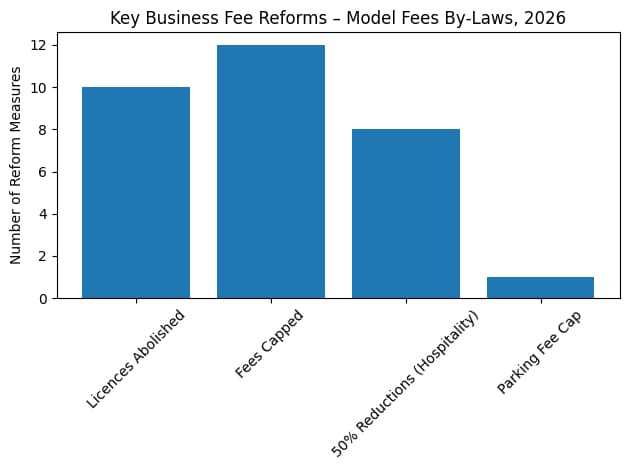
Government has formally gazetted long-awaited reductions and caps on business licensing fees through Statutory Instrument 41 of 2026, publishing the Model Fees By-laws, 2026 aimed at easing the cost of doing business across local authorities.
The instrument, issued in terms of the Urban Councils Act and the Rural District Councils Act, applies to “all urban local authorities and rural local authorities.”
According to the gazette, “The statutory instrument provides a model non-binding framework for the review and standardisation of certain licensing and registration fees chargeable by Local Authorities.” It further states that it “rationalises selected fees, introduces reductions and caps where applicable, and abolishes specified charges in order to promote affordability, consistency and ease of doing business.”
In the retail sector, previously criticised for requiring up to 25 permits to open a supermarket — several licences have been abolished, merged or capped. Bakery, butchery, fishmonger, takeaway and wholesale licences within retail shops have been abolished, while separate standalone operations are now capped at US$500 annually. Municipal or shop licences are capped at US$500, liquor licence registration is set at US$20 annually, and health reports are capped at US$100.
Related Stories
In agriculture, the annual dairy permit flagged last year by the National Competitiveness Commission as part of a 26-permit burden has been dropped. Carcass inspection fees under livestock control have been abolished.
Hospitality operators will see 50% reductions subject to caps — hotel operator licences are capped at US$1 725, lodges at US$500 and guest houses at US$152.50. Fuel storage licences and hotel place-of-assembly charges have been abolished.
City parking fees are now capped at US$0.50.
The explanatory note clarifies that the framework is “non-binding” and “serves as guidance to Local Authorities in aligning their fee structures with national economic policy objectives while maintaining their regulatory functions.”
While Finance Minister Mthuli Ncube previously announced reforms across 12 targeted sectors, the gazetting of SI 41 of 2026 gives legal effect to parts of those changes, shifting the debate from policy promises to implementation by councils.









Leave Comments