








Local university students are leading the charge in modernizing Zimbabwe’s capital markets through technology, as celebrated at the inaugural SECZim Universities Competition Awards Ceremony held recently at Rainbow Towers. The event highlighted how academic creativity and technical skill are being harnessed to strengthen regulatory oversight and financial stability.
The competition challenged teams from four universities—the University of Zimbabwe (UZ), Midlands State University (MSU), Harare Institute of Technology (HIT), and the National University of Science and Technology (NUST)—to develop ICT systems for Prudential and Anti-Money Laundering (AML) Risk-Based Supervision. After live demonstrations in December 2025, a panel of experts evaluated the systems, praising their practical relevance and technical sophistication.
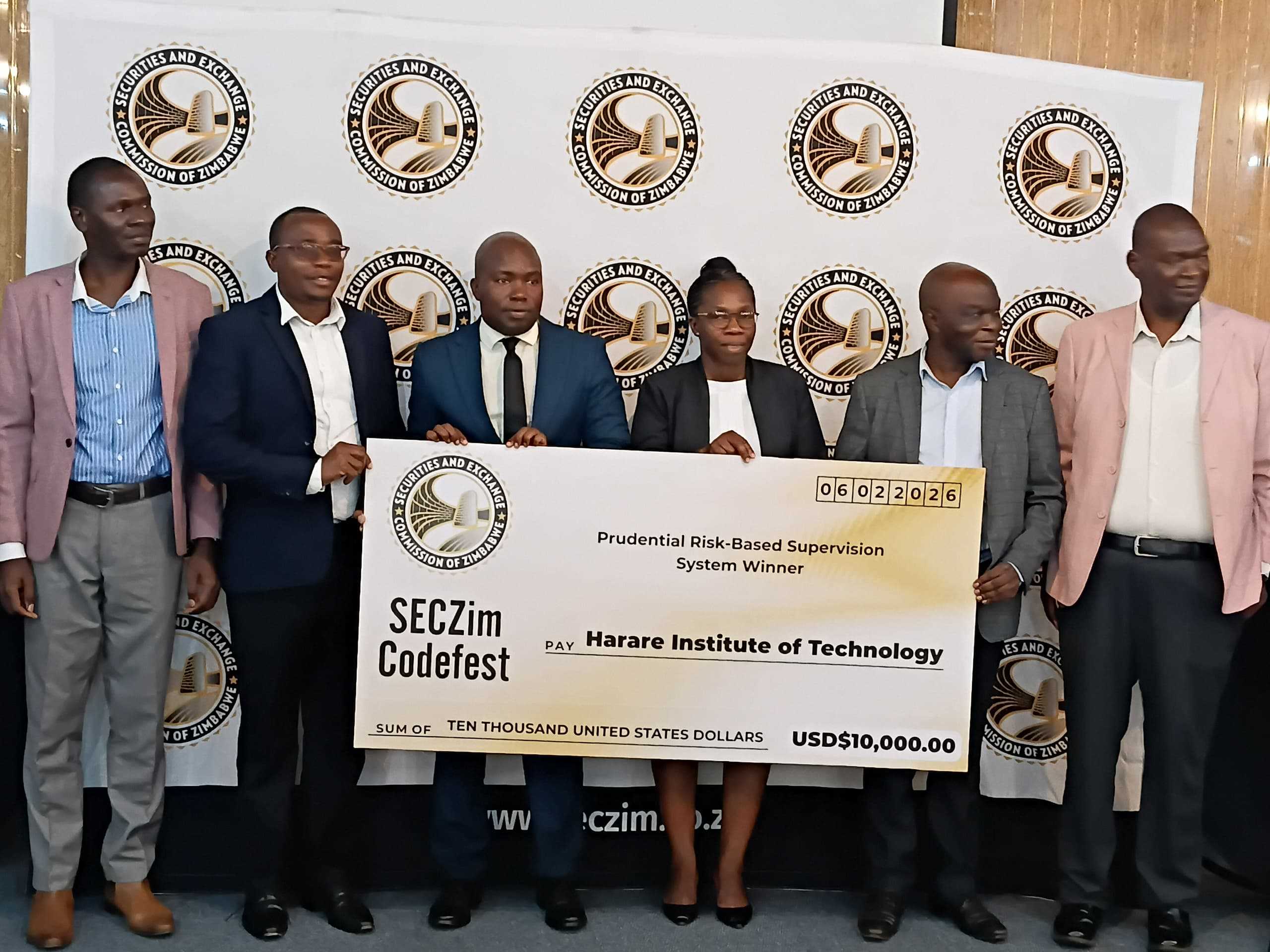
HIT claimed first place in the Prudential RBS category and second in the AML RBS category, while NUST won first place in the AML RBS category and second in Prudential RBS. Winning teams received prize money and showcased how their innovations could improve regulatory efficiency and transparency in Zimbabwe’s financial markets.
Related Stories
Reflecting on the experience, a member of the HIT team Munashe Nzira said, “This competition has been an eye-opener. It taught us teamwork, problem-solving, and how to manage a system of this complexity securely. It’s exciting to contribute to something that could actually be used in Zimbabwe’s financial system.”
Commissioner T. Mushambadope, Guest of Honour, highlighted the broader impact of the initiative. “The Universities Competition demonstrates the value of bridging academia and industry. These innovative solutions are not just theoretical,they have real potential to strengthen market integrity, protect investors, and advance Zimbabwe’s digital transformation,” he said.
The competition forms part of SECZim’s strategy to leverage local talent for regulatory innovation, offering students hands-on experience while addressing real-world challenges.
By investing in young innovators, the Commission is fostering a generation of professionals equipped to shape a robust, transparent, and technology-driven capital market.









Leave Comments