








Zimbabwe has heard its share of dramatic political declarations. But when senior figures close to power begin speaking openly about death, the message is rarely about courage or mortality.
More often, it is a signal — of pressure, fear, and a political system under strain.
The recent declaration by a presidential adviser that he is “ready to die” has been read by some as loyalty or bravery. Analytically, however, such language points less to strength than to instability within elite politics.
Confident systems speak the language of policy, delivery, and results. Systems under stress resort to absolutes — sacrifice, enemies, betrayal, survival.
That shift matters.
Political language is never neutral. It reflects the internal dynamics of power and the anxieties of those operating within it. When an adviser to the presidency invokes death, the statement is rarely aimed at ordinary citizens. It is more often directed inward — toward rivals, allies, and superiors — signalling unwavering loyalty in a contested environment.
Such language tends to surface when political competition has moved beyond persuasion into survival. This does not necessarily imply physical danger.
More commonly, it refers to political death: the loss of position, protection, access, or relevance. In highly centralised systems, where proximity to power determines economic and social security, displacement can feel existential.
In that context, declaring readiness to die is less about sacrifice for the nation and more about reassurance within the hierarchy — an assertion of continued belonging, whatever the cost.
Zimbabwean politics has long been shaped more by loyalty than by institutions. Loyalty must be demonstrated, performed, and repeatedly reaffirmed. Silence is treated as dissent. Nuance is mistaken for betrayal. Moderation becomes a liability.
Extreme declarations therefore serve a purpose. They eliminate ambiguity at moments when ambiguity is dangerous. They draw lines, reassure allies, and warn opponents.
But this performative loyalty comes at a cost. It replaces competence with theatrics and reduces governance to symbolism. When political actors compete to prove devotion rather than capability, administration suffers, and national priorities are displaced by internal power management.
Related Stories
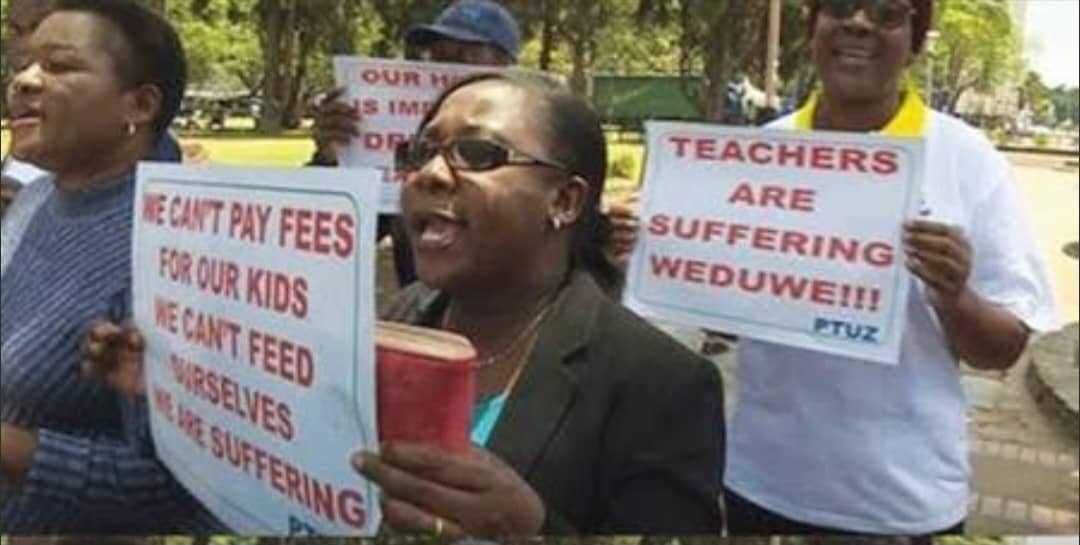
What makes such rhetoric particularly striking is how disconnected it is from the lived realities of ordinary Zimbabweans. For most citizens, death is not a metaphor. It is a material risk shaped by poverty, failing public services, unsafe infrastructure, and a weakened healthcare system.
Against this backdrop, elite talk of dying for political causes rings hollow. Zimbabweans are not looking for martyrs. They are looking for functioning hospitals, affordable transport, predictable incomes, and accountable leadership.
This disconnect deepens public cynicism. It reinforces the perception that political elites operate in a separate moral universe — one where symbolic sacrifice matters more than practical solutions, and internal battles take precedence over national recovery.
Historically, moments when political actors adopt sacrificial or apocalyptic language tend to coincide with uncertainty: succession tensions, internal factionalism, legitimacy concerns, or economic decline. Zimbabwe’s current context contains elements of all four.
The pattern is not unique. Similar rhetoric has emerged elsewhere when power feels contested rather than secure. The danger lies not in the words themselves, but in what they reveal — a political culture increasingly framed as a zero-sum struggle.
When survival becomes the dominant metaphor, compromise disappears. When loyalty is tested through extremity, professionalism is sidelined. Over time, institutions weaken and public trust erodes.
At a deeper level, such language exposes the absence of strong, independent institutions. In institutionalised systems, individuals are replaceable and roles endure. In personalised systems, individuals are the system. Losing favour is not merely a career setback; it is total collapse.
That is why death metaphors resonate. They are not exaggerations, but reflections of how power is experienced internally — precarious, personalised, and unforgiving.
Yet this same reality traps Zimbabwe in cycles of stagnation. A political class consumed by internal survival has little capacity for long-term reform or inclusive development.
Ultimately, when political language becomes this extreme, it is rarely a sign of strength. It is a quiet warning of fragility.
Power that is confident does not require declarations of martyrdom. It requires results. Zimbabweans are not asking leaders or their advisers to die for them. They are asking them to govern — competently, transparently, and with restraint.
A politics that repeatedly reaches for the language of death has already lost the language of life.
Simbarashe Namusi is a peace, leadership and governance scholar, as well as a media expert, writing in his personal capacity.









Leave Comments