



Photo credit: Researchgate
Zimbabwe is in the throes of one of its worst malaria surges in recent years. This week’s data from the Ministry of Health and Child Care (MoHCC) show more than 1,000 new malaria cases in just a single week—with three deaths recorded from districts including Makoni, Chimanimani, and Mount Darwin. Nationwide, since the start of 2025, the confirmed total has reached some 154,000 cases and 423 deaths.
Health experts point to heavy rains, stagnant water, and increased economic activity such as illegal mining and tobacco curing as key factors fueling mosquito breeding and exposure across high-risk regions.
Beyond the numbers, the surge underlines a deeper warning: decades of progress against malaria are now unraveling, and communities that thought they were safe are again at risk.
What’s changed—and why this surge matters
Earlier in 2025, the country recorded a dramatic rise: cumulative cases nearly doubled compared to the same period in 2024, and deaths climbed sharply.
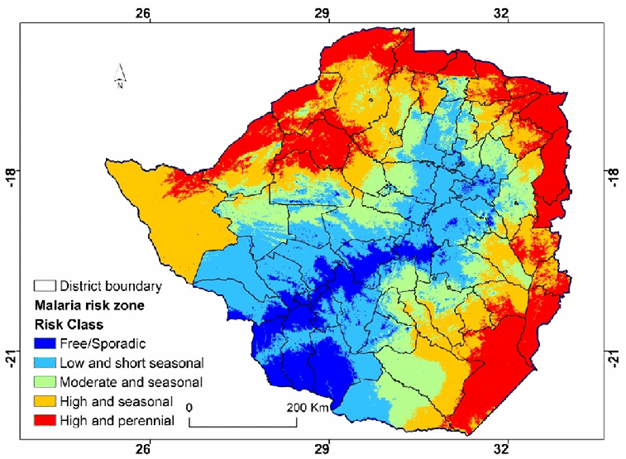
Regions such as Manicaland, Mashonaland Central, and Mashonaland West have borne the brunt of the outbreak, partly because they are low-lying zones prone to flooding and mosquito proliferation, and partly because people in those areas are often involved in outdoor labor during risky hours (sunset to sunrise), increasing vulnerability.
At the national level, the surge signals potential systemic strain: delayed or disrupted net distributions, delayed care in remote areas, and rising pressure on health-care delivery systems.
Related Stories
New efforts: response and regional push
In response, the Africa Centres for Disease Control and Prevention (Africa CDC), with support from the World Bank, has launched operational research in Zimbabwe (as well as Namibia and Lesotho), with a US$150,000 grant to strengthen malaria control and elimination strategies. The study, running from November to December 2025, will assess vector-control interventions (like indoor residual spraying and larvicides), community outreach, surveillance, and outbreak response.
Locally, humanitarian actors such as Save the Children have also mobilized, targeting hotspot districts with integrated malaria response efforts to reduce illness and deaths, while gearing up early for possible additional outbreaks during the rainy season.
These renewed efforts, if sustained, could help stabilize the situation, but the underlying warning remains loud and clear: malaria’s return is a wake-up call for Zimbabwe.
What it means for you
Many Zimbabwean families may believe malaria is “over,” but current reality proves otherwise. The danger is real. Bed-net coverage may not be enough anymore, and unpredictable rainfall or outdoor work might expose people to higher risk than before.
You should take this as a call to remain vigilant: use treated nets, avoid exposing yourself during mosquito-active hours, treat any fever promptly, and support community efforts to spray and clear breeding sites.
At a higher level this surge reminds policymakers, funders, and communities that the fight against malaria is far from over. Sustained, well-funded, locally owned interventions will be key.
Why this story deserves the spotlight
Because it touches millions: from rural families in low-lying provinces to urban workers migrating across provinces. It’s not abstract; it’s a pressing, unfolding crisis that demands attention now. With new research, community response, and climate-linked risks converging, the story is no longer “just health data.” It’s about survival, equity, and a test of Zimbabwe’s resilience.









Leave Comments