








Daily many women have kneel at the altar—not in worship, but in desperation.
Told to pray harder, submit more, and fast longer, they are taught that God expects endurance, not escape. Healing, not justice. Silence, not safety.
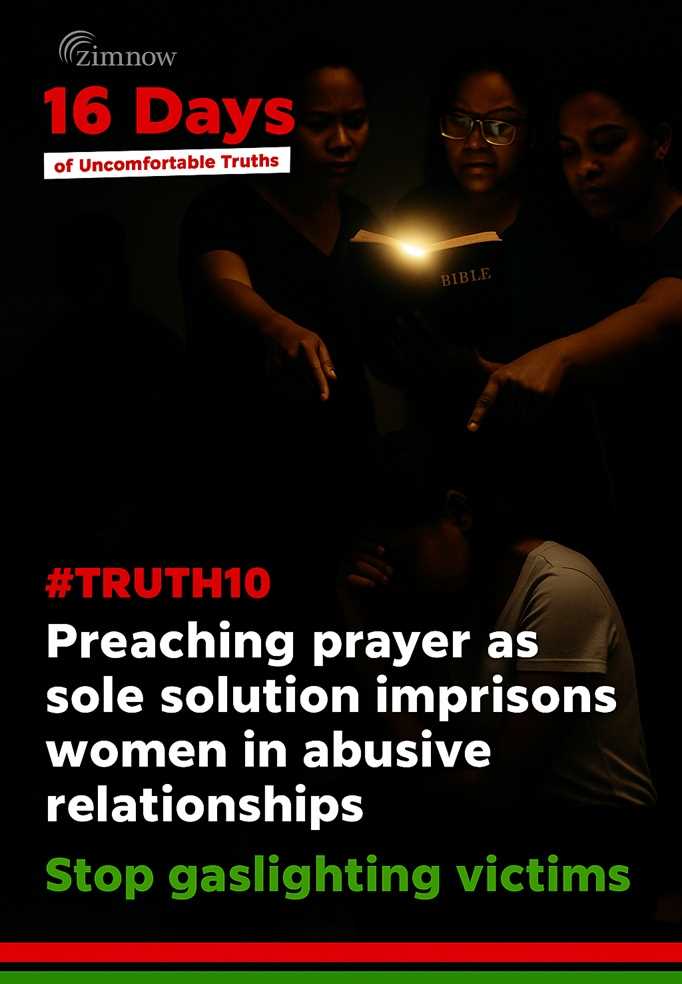
But when prayer is prescribed as the primary and only path to salvation, it becomes a weapon of oppression dressed as faith.
“Shandisa mabvi” is a psychological whip. It implies that abuse continues because you haven’t prayed enough, because your spiritual posture is inadequate, and therefore you are to blame for your own suffering.
And the whip is often wielded by other women, rather than church leaders. Women in apparently happy and successful marriages patronize those who cannot hide their unhappy situations. Their sympathy is tinged with derision and scorn. Their servings of mercy and compassion always come with a discernible liberal sprinkle of superiority, the implication that their own prayers are on point, hence their great lives.
And when victims are spiritually shamed, what do they do? They stay. They hide the abuse because they want to avoid being judged as inadequate prayer warriors. They endure. They break inside while presenting a strong front. Because leaving would mean admitting spiritual failure.
Churches have been flagged as platforms for powerful anti-GBV change. But are the conversations frank enough? Is the message being packaged effectively? Is the discussion progressive?
The problem is not prayer. Prayer is powerful. Faith is strength. But prayer alone does not stop a fist. It does not rewrite an abuser’s character. It does not replace protection orders, safe houses, or prosecution.
Related Stories
When churches respond to domestic violence with prayer instead of justice, they don’t just fail victims—they gaslight them. They take the weight of abuse off the perpetrator
and place it squarely on the victim’s back.
And so, a bruised woman kneels deeper, bleeds longer, and dies praying for a miracle that should have been a legal intervention.
Well-meaning counselors are part of the problem. Not because they’re malicious, but because they genuinely believe prayer alone heals fractures, softens hearts, and reforms violent men.
In reality? Their counsel delays escape. Their theology keeps abusers in power. Their messages reduce GBV reporting because:
📍 If abuse continues, you lacked faith
📍 If he hit you again → you didn’t submit enough
📍 If you leave, you’ve failed spiritually
That is not ministry. It is manipulation wrapped in scripture. Faith should not imprison women. It should protect them. True religion empowers. It comforts the broken. It does not demand their continued breaking.
When a woman says she is being beaten, raped, controlled, or traumatized, the first response should be safety—not scripture. Remove her from danger before you place her on the prayer line. Pray with her as she heals, not as she bleeds.
Because faith is not meant to be a cage. It should be a bridge to liberation—not a boundary around her pain.







Leave Comments