




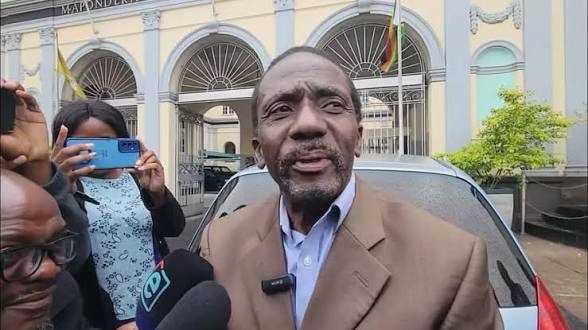
When Jameson Timba recently declared that Constitutional Amendment Bill No. 3 "will fall" and urged the Citizens Coalition for Change Progressive Caucus to reject it, he was speaking in a familiar register: constitutionalism, institutional accountability and parliamentary resistance.
It is a language he has consistently employed throughout his political career.
Yet the question that continues to hover over Zimbabwean opposition politics is not whether Timba has been active enough. It is whether his interventions would have carried greater political weight had he possessed the popularity, charisma and electoral magnetism of Nelson Chamisa.
The answer matters because the history of Zimbabwe's opposition suggests that political influence is often determined not by the strength of an argument but by the size of the audience willing to rally behind it.
Timba's recent stand against CAB3 is only the latest chapter in a political journey defined by resistance to what he and his allies view as democratic erosion. Since assuming a prominent role within the opposition following the collapse of CCC structures and Chamisa's departure, Timba has emerged as one of the most visible institutional opponents of government initiatives.
His arrest together with more than 80 opposition activists in June 2024 transformed him from a parliamentary figure into a symbol of opposition resilience. At the time, lawyers and rights groups argued the arrests represented a shrinking democratic space, while CCC officials described the developments as evidence of democratic regression.
Unlike Chamisa, however, Timba's politics have rarely generated emotional fervour.
This distinction is critical.
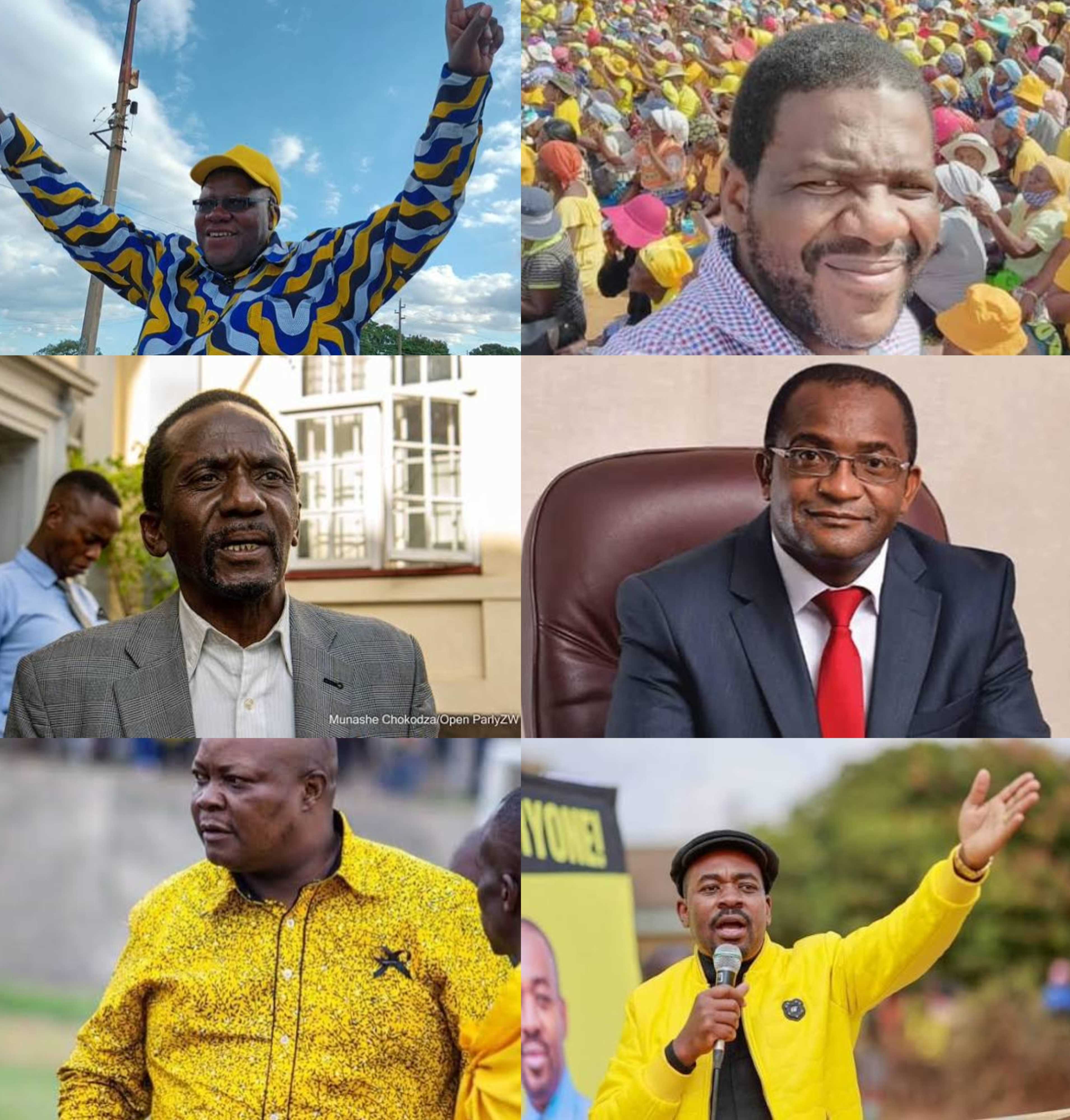
For more than a decade, Chamisa occupied a unique position in Zimbabwean politics. Whether one agreed with him or not, he possessed a capacity to mobilise supporters that few politicians in post-independence Zimbabwe have demonstrated outside of the ruling party.
Political scholars examining Chamisa's rise have pointed to the relationship between personality politics and electoral mobilisation, arguing that his political appeal became central to opposition mobilisation after the death of Morgan Tsvangirai.
Even critics acknowledge this reality.
In one of the more striking observations on Zimbabwe's opposition, veteran academic and political analyst Ibbo Mandaza described Chamisa as the "Pied Piper" of opposition politics, while critics and supporters alike recognised that the CCC increasingly became identified with Chamisa himself rather than its organisational structures.
Indeed, the slogan "Chamisa Chete Chete" became less a campaign message than a political phenomenon. Analysts later argued that the opposition's greatest strength and weakness became the same thing: Nelson Chamisa.
That reality creates an intriguing counterfactual.
Imagine Timba possessing the same political capital.
Imagine that every constitutional argument he raised generated national debate. Imagine that every parliamentary intervention filled public squares. Imagine that every challenge to government policy mobilised thousands of citizens.
Would Zimbabwe's political trajectory look different?
The first major difference would likely have emerged during the post-2023 opposition crisis.
Following the recalls that gutted CCC's parliamentary representation and the turmoil that eventually culminated in Chamisa abandoning the party, the opposition entered one of the most fragmented periods in its history. Chamisa argued that the party had been infiltrated and effectively captured through external manipulation.
Yet analysts offered a different diagnosis.
Alexander Rusero argued that Chamisa's departure reflected a loss of organisational control, while Mandaza criticised the structureless nature of CCC, arguing that excessive concentration of power around one individual weakened institutional resilience.
This is where Timba becomes politically interesting.
Throughout the opposition's crisis, he represented the opposite tendency.
While Chamisa increasingly became associated with strategic ambiguity and personality-driven mobilisation, Timba positioned himself around constitutional processes, parliamentary structures and organisational continuity.
Had Timba possessed Chamisa's popularity, the opposition may have found itself with something it has historically lacked: a leader capable of combining institutional discipline with mass appeal.
Zimbabwe's opposition has often oscillated between two models.
The first is the charismatic model embodied by Tsvangirai and later Chamisa. It excels at mobilisation, generating hope and attracting public enthusiasm.
The second is the institutional model represented by politicians who focus on Parliament, constitutional safeguards and governance systems.
The problem is that these two strengths have rarely resided in the same individual.
Chamisa's supporters frequently argued that his popularity was his greatest political asset. Even online discussions among Zimbabweans often reflected a consensus that, regardless of internal party disputes, he remained the only opposition politician capable of mobilising millions of voters and commanding national attention.
Related Stories
Yet critics increasingly questioned whether popularity alone was enough.
Analysts accused Chamisa of cultivating personality politics at the expense of institution-building. Critics argued that his political project often appeared rich in symbolism but weak in organisational depth.
If Timba had inherited Chamisa's popularity without inheriting those weaknesses, Zimbabwe's opposition could potentially look very different today.
CAB3 itself offers a useful case study.
At present, opposition resistance to the constitutional amendment is largely concentrated within Parliament, civil society organisations and constitutional advocacy groups.
A Timba with Chamisa-level popularity could potentially transform that resistance into a national movement.
The difference between parliamentary opposition and mass opposition is not merely numerical.
Parliamentary opposition debates laws.
Mass opposition changes political calculations.
One only has to look at Zimbabwe's history to understand the significance of that distinction. The constitutional referendum of 2000 demonstrated how broad-based public mobilisation can alter political outcomes even when state institutions appear aligned in another direction. The emergence of the MDC under Tsvangirai similarly showed how public enthusiasm can reshape political discourse.
Timba's constitutional arguments are often detailed and legally grounded.
Chamisa's political messaging has historically been emotionally resonant and electorally effective.
Combined, they might have produced a more formidable opposition force.
Yet there is another possibility.
Perhaps Timba's relative lack of popularity is not accidental but a reflection of what Zimbabwean voters reward.
Politics is not a debating society.
Constitutions matter, governance matters and parliamentary oversight matters, but voters frequently connect more strongly with symbols, personalities and hope than procedural arguments.
The tragedy of Zimbabwe's opposition may therefore be that it repeatedly produces leaders who embody one side of the equation while lacking the other.
Chamisa brought crowds but struggled to institutionalise them.
Timba brings institutions but struggles to mobilise crowds.
The result is an opposition movement that often appears trapped between charisma and structure.
As CAB3 approaches Parliament, Timba's latest intervention once again highlights this contradiction.
His statement was uncompromising:
"Country before expediency. Constitution before politics."
It is a message that reflects a politics rooted in principle and institutional defence.
But had those words been spoken by a politician with Chamisa's ability to command national attention, they might have resonated far beyond parliamentary chambers and social media timelines.
Zimbabwe's opposition today remains caught between what Timba represents and what Chamisa represented.
One offers organisation, constitutionalism and persistence.
The other offered visibility, excitement and mass mobilisation.
If Timba had Chamisa's popularity, the opposition might well be stronger, more coherent and more capable of challenging the ruling establishment.
But perhaps the more uncomfortable conclusion is that Zimbabwe's opposition has spent years searching for either another Chamisa or another Tsvangirai when what it may actually need is something rarer: a leader who can fill a stadium in the afternoon and defend a constitution in the evening.





Leave Comments