






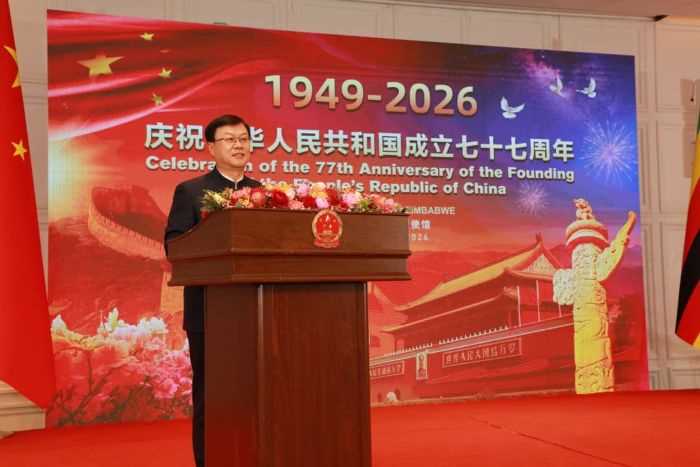
The Embassy of the People’s Republic of China in Zimbabwe has issued an advisory urging Chinese enterprises and nationals to exercise caution and strengthen compliance measures following recent policy shifts by the government affecting the mining sector.
The warning comes after authorities in Harare suspended exports of unprocessed minerals and lithium concentrates, while also introducing stricter regulations governing sectors reserved for local participation.
The measures mark a significant shift in Zimbabwe’s resource management strategy, particularly in the lithium sector, which has rapidly emerged as one of the country’s most valuable export industries.
In its notice, the Chinese Embassy called on investors to undertake thorough assessments of Zimbabwe’s business environment, industrial policies and legal framework before committing capital. It cautioned that policy changes could expose investors to financial risks if not carefully evaluated.
“Investors shall conduct a comprehensive and in-depth assessment of the local business environment… and make informed decisions so as to avoid losses resulting from government policy changes,” the embassy said.
Related Stories
Chinese firms already operating in Zimbabwe were also urged to strictly comply with local laws and adopt proactive risk management strategies, while safeguarding their rights through legal channels.
China has become a dominant player in Zimbabwe’s mining sector, with major investments in lithium, gold and other mineral extraction projects. These investments have helped accelerate production, positioning Zimbabwe as an important supplier within global battery supply chains. However, much of the sector’s growth has been driven by the export of raw or minimally processed materials.
The new policy direction reflects a broader trend among resource-rich African countries seeking to maximise value from their natural resources. By restricting the export of unprocessed minerals, Zimbabwe aims to promote domestic beneficiation, stimulate industrialisation and increase export earnings through higher-value products.
Authorities also view the move as a strategy to generate employment and reduce reliance on imported finished goods, which have historically cost the country more than its raw material exports.
For Chinese investors, the regulatory changes present a mixed outlook. Existing business models centred on extraction and export may face disruption, but companies willing to invest in local processing infrastructure could secure longer-term benefits and maintain access to Zimbabwe’s mineral reserves.
The embassy’s advisory underscores growing uncertainty for foreign investors in extractive industries, as governments across Africa increasingly review contracts and tighten regulations to assert greater control over strategic resources.
As global demand for critical minerals such as lithium intensifies, Zimbabwe’s policy shift signals a determination to capture more value domestically.





Leave Comments