









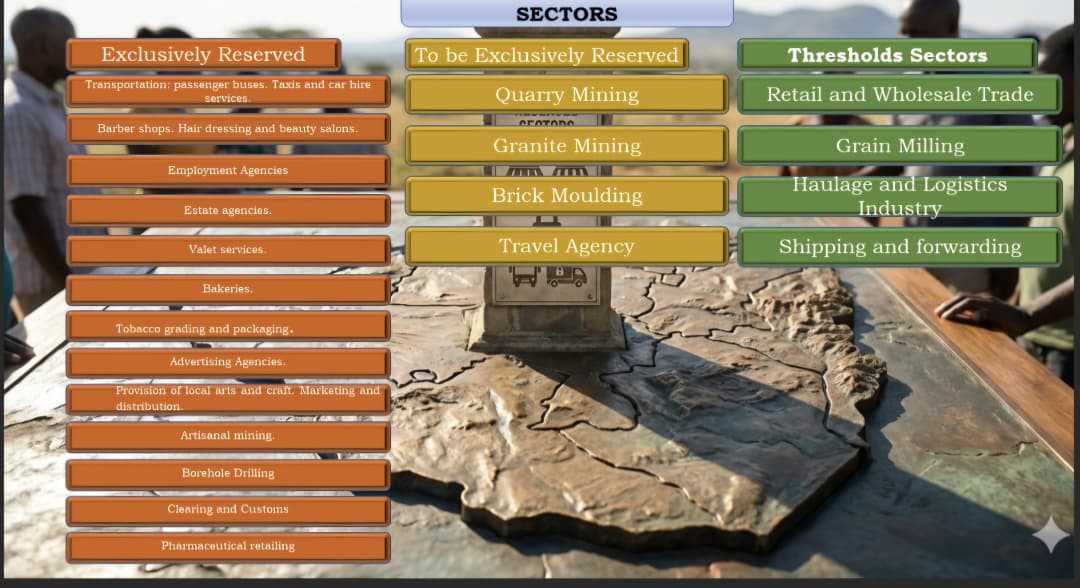
The Ministry of Industry and Commerce says enforcement of reserved sectors under Statutory Instrument 215 of 2025 will begin soon as authorities move to increase citizen participation in key segments of the economy.
Officials said the policy seeks to ring-fence selected low-capital economic activities for Zimbabwean citizens, a measure government argues will expand local ownership and improve livelihoods.
According to the ministry, the regulations are intended to “ensure equitable redistribution of wealth, drive increased citizen ownership and ring-fence low barriers to entry economic sectors.”
The ministry said it has established a command centre to coordinate compliance with the regulations, with authorities currently reviewing regularisation plans submitted by affected businesses before inspections begin.
Related Stories
Officials said the framework forms part of broader economic restructuring efforts under the country’s development policy framework, aimed at widening participation in sectors traditionally dominated by foreign-owned or large corporate operators.
“The Reserved Sector regulations… fall within strategies for inclusive economic growth and structural transformation across sectors,” the ministry said during stakeholder engagements.
However, the policy has also triggered debate among businesses and economists who warn that implementation could affect supply chains and investor confidence if enforcement is not clearly defined.
Reserved sectors typically cover activities such as retail trade, hairdressing, small-scale manufacturing and transport services industries characterised by relatively low barriers to entry and large informal participation.
The ministry said enforcement and compliance inspections will begin after authorities assess regularisation plans from businesses currently operating in sectors earmarked for citizen participation.









Leave Comments