





Zimbabwe is sitting on one of the most powerful windfalls in its modern economic history, yet only a few individuals are harvesting the spoils. As global gold prices rocket past US$5,000 an ounce in a historic bull run, Zimbabwe lost more than US$5.5 billion worth of gold in 2025, unofficial reports indicate.
“A lot of gold is bypassing official channels, and it is highly connected individuals who are running the show,” an industry source told this publication.
This is not a new crime, just an old one amplified by price and rising production.
In 2020, around 22.4 tonnes worth US$1.5 billion were smuggled out. With the country declaring a record 46.7 tonnes in 2025, the underworld has grown richer. Applying the 2020 smuggling ratio of 75% to 2025's official output suggests actual production could be over 80 tonnes, with over 35 tonnes smuggled. At prices averaging US$4,800–US$5,000/oz, that loss equates to US$5.4 to US$5.7 billion.
While Fidelity Gold Refinery reports increased deliveries, especially from small-scale miners, much gold never reaches formal channels. Producers under-declare to avoid paying royalties, while syndicates thrive off backdoor sales.
“Because of the royalties being paid in real gold and other regulatory issues, some producers are understating production to limit their exposure,” the source added. The worst bleeding, however, comes from outright smuggling, often by politically connected networks.
In one province (name withheld), a de facto criminal syndicate of connected individuals extorts foreign-owned gold mines. The source said the mines are forced to pay the syndicate in gold, which the individuals then smuggle out of the country.
In other areas, business fronts are set up as fronts. “While they make noise about their cover operations, the real business is to buy gold from magweja and smuggle it out,” the source said. He said it is these big players who have smaller actors moving around with mobile milling machines and cash.
Related Stories
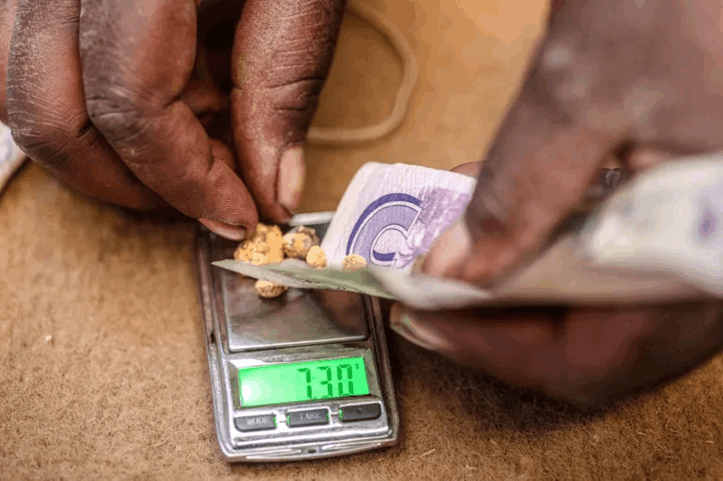
The incentives for artisanal miners to sell to smuggling cartels are clear. Official channels offer lower prices and partial local currency payments. Smugglers pay in hard cash, no questions asked. On a 1kg parcel, a miner can earn US$10,000 to US$15,000 more on the black market.
Routes are well-worn. Gold exits Zimbabwe by road into South Africa or Zambia, or via air, sometimes on private planes. Dubai remains a key destination. In several cases, gold has been hidden in luggage, car panels, or handed off mid-transit.
Authorities occasionally intercept smugglers, but most cases rarely lead to major convictions, especially where powerful figures are implicated. Recent law enforcement data shows increasing volumes.
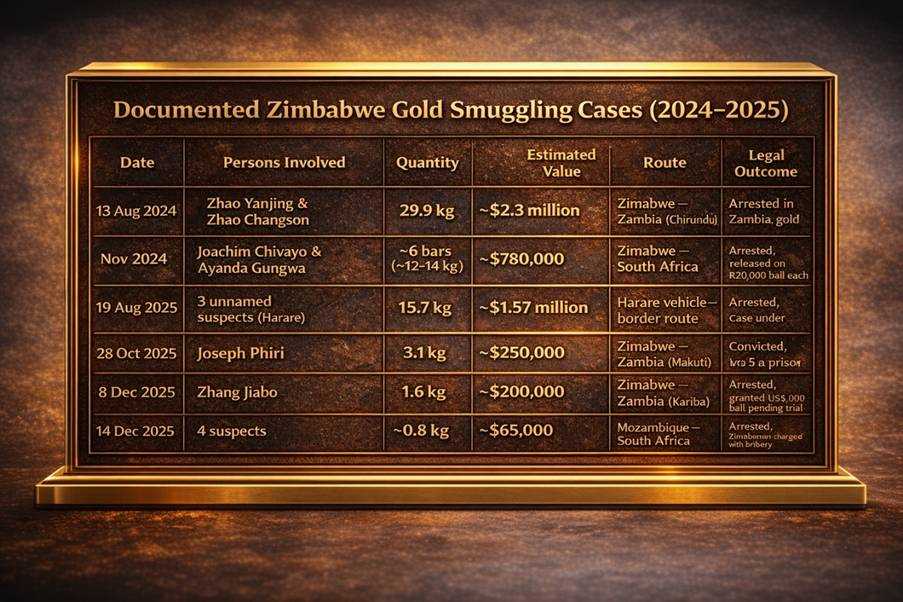
Between August 2024 and December 2025, Zimbabwe recorded at least six confirmed gold smuggling incidents involving a total of over 66 kilograms of gold, valued at more than US$5 million. These cases included high-profile and foreign nationals—such as Chinese, Zambian, and Mozambican suspects—smuggling gold through major border points like Chirundu, Kariba, Makuti, and routes into South Africa. Notable incidents include the seizure of 29.9 kg of gold from two Chinese nationals at Chirundu and 15.7 kg intercepted from a Harare-based vehicle syndicate. Legal outcomes ranged from arrests and court trials to a 5-year conviction for one Zambian national, while several cases remain under investigation. The scale and diversity of these smuggling attempts highlight the entrenched and transnational nature of Zimbabwe’s gold leakage crisis.
These are only confirmed cases. Most of the smuggling remains unseen. In 2024, U.S. sanctions revealed a transnational smuggling network robbing Zimbabwean citizens of billions. The network’s alleged leaders include politically connected gold dealers accused of laundering gold through Dubai.
The term “Zvigananda”, a reference to elites growing obscenely rich off state resources, has become shorthand for the few who profit from Zimbabwe’s extractive economy. Vice President Constantino Chiwenga recently lamented how war veterans were getting token payments while others amassed millions from the nation’s gold.
Gold accounts for 40% of Zimbabwe’s export earnings. With billions lost annually to smuggling, the impact is severe: lost revenue, fewer public services, and a weakened currency. Even with high prices and strong output, the national economy remains strained.
Authorities have promised reforms, including better tracking, surveillance, and increased payouts to miners. Yet enforcement remains patchy. Sting operations net minor players while the big fish often evade justice.
If Zimbabwe cannot close the leak, the gold boom will remain a missed opportunity to create common prosperity and move the country towards Vision 2030 beyond sloganeering.







Leave Comments