






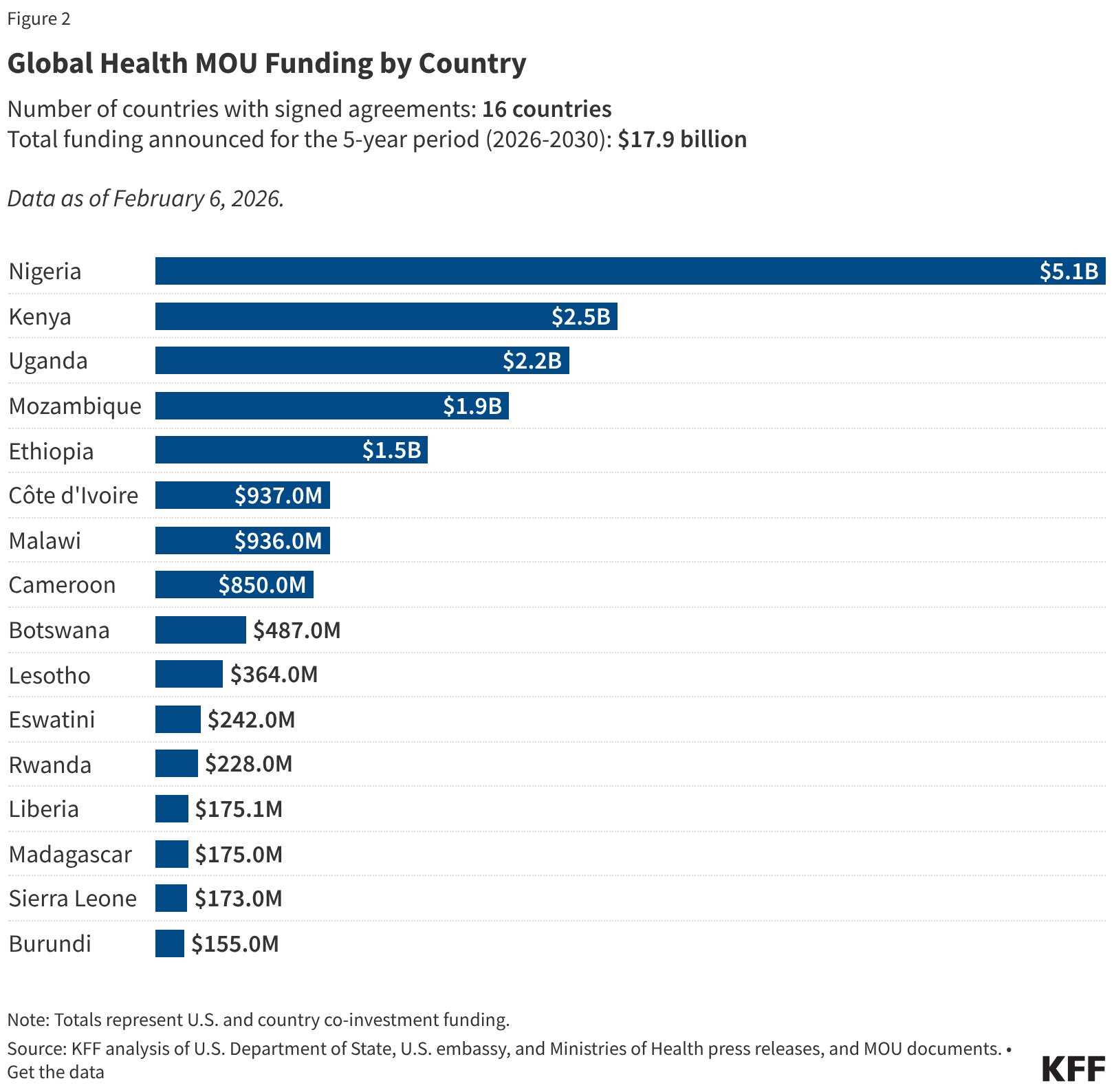
The United States Embassy in Zimbabwe says it will wind down health assistance to Zimbabwe after Government withdrew from negotiations on a proposed US$367 million, five-year bilateral health Memorandum of Understanding.
In a statement, U.S. Ambassador Pamela Tremont said: “We will now turn to the difficult and regrettable task of winding down our health assistance in Zimbabwe…. The Government has assured us it is prepared to sustain the fight against HIV/AIDS, and we wish them well.”
The U.S statement and withdrawal comes as Government of Zimbabwe has directed officials to discontinue negotiations with the United States on the proposed health cooperation agreement, citing concerns over national sovereignty.
In a memorandum dated 23 December 2025, the Ministry of Foreign Affairs and International Trade said discussions had been underway between the Ministry of Health and Child Care, the Ministry of Finance, Economic Development and Investment Promotion, and the United States Embassy in Harare regarding an MoU under the America First Global Health Strategy.
Related Stories
The memorandum, signed by Secretary for Foreign Affairs and International Trade Ambassador Albert Chimbindi, stated that Washington had proposed the MoU as a framework through which it would provide health support under specified terms and conditions.
However, the ministry said President Emmerson Mnangagwa had ordered that negotiations be stopped.
“Please be advised that the President, Emmerson Dambudzo Mnangagwa, has directed that Zimbabwe must discontinue any negotiation with the USA, on the clearly lop-sided MoU that blatantly compromises and undermines the sovereignty and independence of Zimbabwe as a country,” the memorandum reads.
According to the memorandum, the proposed agreement was intended to guide future U.S. health assistance, though details were not outlined.
Social and political commentator Derek Goto said two elements of the proposed agreement reportedly raised serious concern among officials, including a clause seeking direct access to Zimbabwe’s health data for a defined period — something authorities viewed as excessive and potentially intrusive.









Leave Comments